
Feeling Wiped for No Reason? It Might Be Low Iron
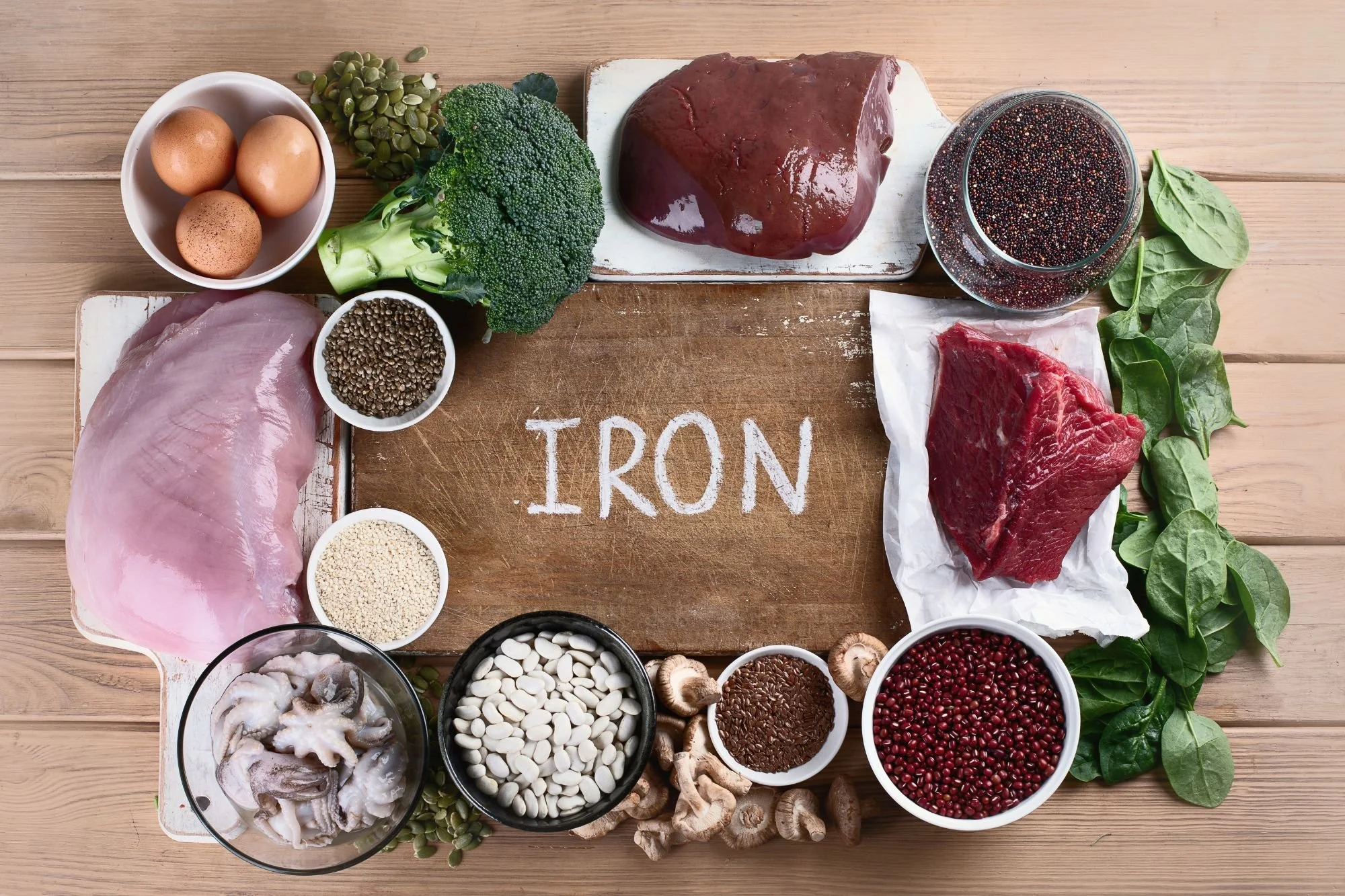
If you’re exhausted during workouts, losing focus mid-day, or catching every cold going around, low iron could be to blame. Active women are especially at risk—and “normal” labs don’t always mean your iron levels are actually working for your body.
This blog breaks down what iron actually does, how to spot the signs of deficiency, and what to do if you suspect it’s dragging you down.
What Iron Actually Does
Iron doesn’t get much spotlight, but it does a lot behind the scenes. It’s the mineral that helps oxygen travel through your bloodstream to your muscles and brain. I always remind my clients: even small dips in iron can affect how you think, train, and recover.
Here’s what iron supports in your body:
Oxygen delivery. Hemoglobin in your blood and myoglobin in your muscles both rely on iron to shuttle oxygen where it’s needed (like during a hard workout.
Energy production. Iron helps your cells make ATP (the fuel that keeps you going).
Muscle recovery and repair. It supports tissue healing, collagen production, and joint health.
Mental focus and mood. Iron plays a role in making dopamine and serotonin—your “focus” and “feel good” brain chemicals.
Immune strength. It helps white blood cells do their job and keeps your gut defenses strong.
Pregnancy support. Your blood volume increases dramatically during pregnancy, and iron helps deliver oxygen to both you and your growing baby.
Without enough iron, every one of those systems starts to slow down. And even if you’re training hard, eating “healthy,” and sleeping well, you might still feel off
Let’s talk about how to spot the signs of low iron.
Low Iron Red Flags
Low iron doesn’t usually hit all at once. It usually creeps in slowly. So if something’s felt off lately, run through this list.
You might be low on iron if…
You’re always tired, even after a full night’s sleep
Your workouts feel harder than they used to, but you’re not sure why
Your recovery is slower, and you’re sore way longer than normal
You get winded on stairs or during warmups
You’ve hit a plateau you can’t shake
You keep getting sick, and it takes forever to bounce back
You feel foggy or scattered
Your mood’s off and you can’t explain why
You’re pregnant and the exhaustion is next level
You’ve noticed weird cravings (like ice), thinning hair, or brittle nails

6 Ways to Get More Iron + Increase Iron Absorption
If low iron is slowing you down, don’t panic. You don’t need to start popping pills right away. Most people can make a big difference with a few small shifts. Here’s what I suggest:
1. Choose “Heme Iron” Sources
Heme iron sources are animal products like chicken, beef, turkey & lamb. Heme iron is more easily absorbed compared to non-heme sources, which are plant-based.
2. Pair Iron with Vitamin C
Pairing iron intake with things such as citrus, tomatoes, peppers and berries enhances iron absorption. Vitamin C also helps your body absorb iron by blocking the things that usually get in the way, like certain minerals and compounds.
3. Caution with Calcium
I’m sure you’ve heard how important it is for us to get enough calcium. But when you eat calcium and iron together, your body can’t absorb the iron as well. If you’re taking supplements, make sure you take iron and calcium supplements separately.
4. Cook with Cast Iron
Cast iron pots and pans can add iron to food!
5. Cut Back on Tea & Coffee
Tea and coffee have compounds called polyphenols that block iron absorption. Consider cutting back or just avoid drinking them around the same time you eat iron-rich foods.
6. Include Raw Vegetables
Cooking can decrease the iron content of vegetables. Try to include raw spinach, kale, collard greens, or broccoli in your diet.
What to Do If You Still Feel Off
If you’re still feeling off after a few weeks of dialing in your nutrition, talk to your doctor.
Get a simple blood test to check your iron levels before taking any supplements.
Don’t supplement blindly. Too much iron can backfire and cause more problems than it solves.
Wrap-Up
Iron isn’t the flashiest topic in nutrition, but it makes a huge difference, especially if you’re active. If your workouts feel harder than usual or your energy seems low for no reason, it could be low iron.
Small changes like adding more heme iron from meat, pairing iron-rich meals with vitamin C, cooking in cast iron, and spacing out coffee or calcium supplements can help get your iron levels back up.
If you’re already doing these things and still feel off, don’t just tough it out. There might be something deeper going on!
Ready to get to the bottom of your fatigue?
Let’s look at your symptoms and figure out what’s really going on. I offer virtual consultations and take most major insurance plans.
Click here to book a free discovery call and we’ll talk through what’s been going on and what next steps might make sense.