
If You Do Regular Cardio, Do You Still Need to Train Your Legs?
We get this question a lot, and it came up again recently after our Back Squat Competition.
TLDR: If you already run, bike, walk, or use the elliptical regularly, you still need to train your legs. Cardio alone won't cover it.
Cardio is awesome, so don't ditch it. You just need to understand that cardio and resistance training give your body different reasons to adapt.
Cardio is Still a Win
First, cardio deserves some credit. Regular cardio is one of the best things you can do for your heart and overall longevity. The American Heart Association recommends regular aerobic activity along with muscle-strengthening work. When you do cardio consistently, your cardiovascular system gets better at delivering and using oxygen.
Doing cardio regularly leads to some pretty specific changes. Your heart pumps more blood with each beat, your resting heart rate drops, and you develop more capillaries around your muscles—think of these as extra delivery routes for oxygen. Your body also gets better at using that oxygen and produces more mitochondria, which, as you may recall from this weirdly universal high school biology mantra, are “the powerhouse of the cell.”
So we want you doing cardio. If your goal is better heart health and longevity, it belongs in your routine. Cardio benefits your heart, while strength training benefits your muscles and bones.
Cardio and Strength Do Different Jobs
Cardio and strength training demand different things from your body. Cardio asks your heart, lungs, and blood vessels to sustain effort over time. Resistance training gives your bones, muscles, tendons, and connective tissues a reason to adapt to load. You can be a great runner and still need to squat, or cycle several times a week and still benefit from lunges, hinges, and loaded carries.
What Resistance Training Does for Your Lower Body
Bone Density
Resistance training puts a meaningful load through your skeleton, which matters because maintaining strong bones helps reduce the risk of osteopenia and osteoporosis. Weight-bearing exercise plays a role in bone health, and this is one of the benefits of leg training that often gets overlooked.
Strong muscles are good, and so are strong bones!
Muscle Mass
Muscle mass peaks around early adulthood and then declines. The National Institute on Aging notes that strength training can help slow that decline and maintain mobility and independence, with NIH News in Health reporting that people start losing muscle around age 30 at roughly 3–5% per decade.
Please don’t wait until you're older to care about this, though. Building and maintaining muscle is something you want to work on throughout adulthood. The more strength and muscle you build now, the more you’ll maintain as you age.
Your legs get you up the stairs, out of a chair, onto a trail, and back down to the floor to play with your kids, so keeping them strong helps you stay independent.
Tendon and Connective Tissue Strength
Muscles don't work alone. Your tendons and other connective tissues help transfer force and keep your joints moving. Progressive resistance training gives them a reason to adapt to load too. That helps your body handle the things you actually do outside the gym. That’s the goal, right?
Insulin Sensitivity
When you train your muscles, they take up glucose for energy. The American Diabetes Association explains that exercise increases insulin sensitivity and helps muscle cells use available insulin more effectively, which is another reason strength training belongs in a well-rounded program.
You'll notice the difference in everyday life too: stairs, groceries, getting off the floor, hiking, catching yourself when you trip. You don't need to train for a powerlifting meet to care about leg strength; you just need enough strength to keep doing the things you like doing.
Why Just Cardio Misses the Legs
Running, cycling, and the elliptical are all good cardio. They challenge your cardiovascular system and make your legs work.
But these “cardio activities” don’t create the same mechanical tension as squats, lunges, hinges, and loaded carries.
Cardio can absolutely build some leg muscle, especially if you're new to training or doing demanding work, but progressive resistance training is more reliable when the goal is lower-body strength. Walking and cycling give your legs plenty of movement, but squats and lunges add the load they don't get from cardio, and your legs need that reason to stay strong.
For a well-rounded program, we want both. The goal is to give your body the stimulus it needs for the result you want.
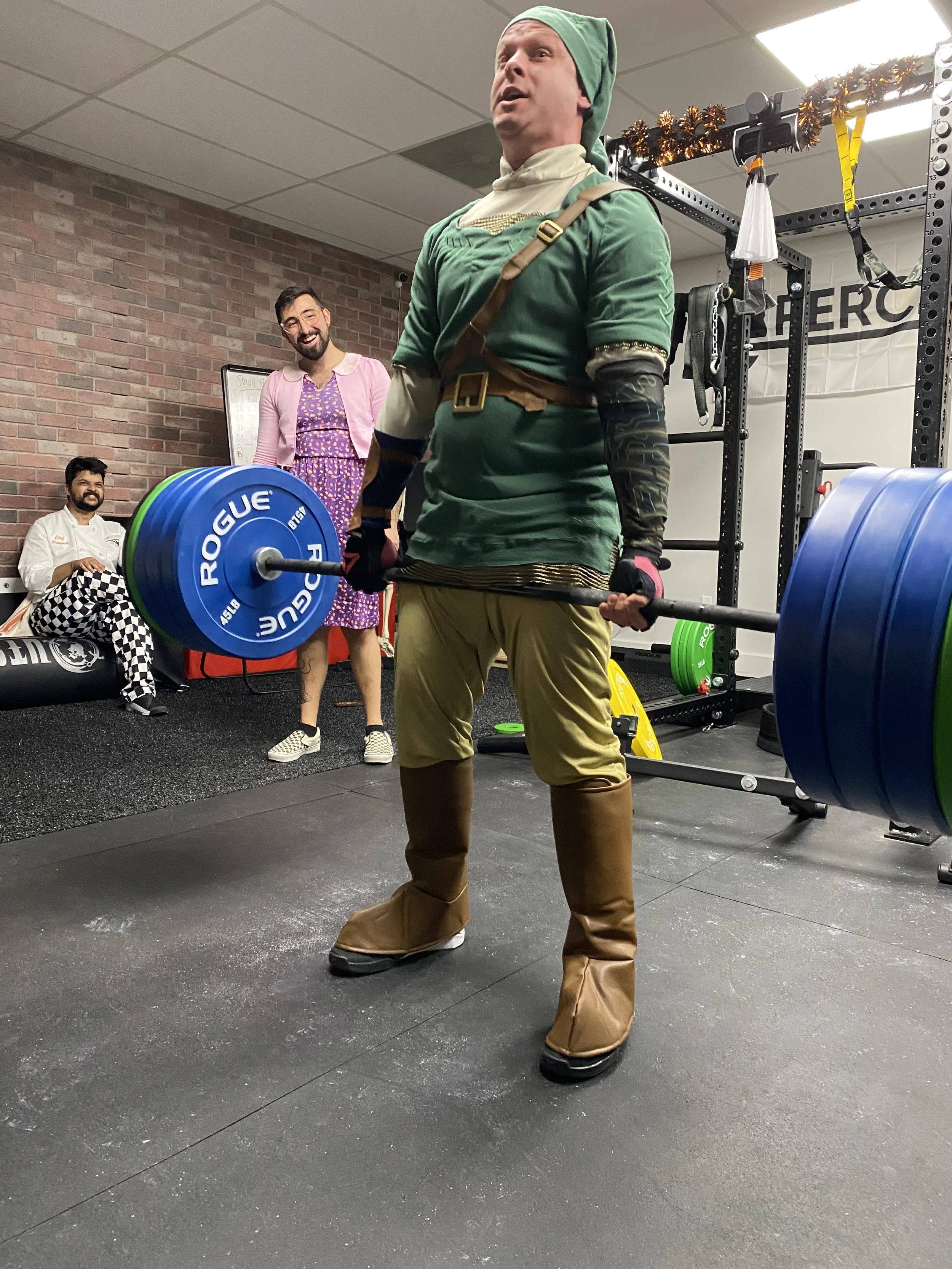
A little leg-training action from our annual Halloween deadlift competition, “Night of the Lifting Dead”
How to Fit Both without Living in the Gym
You can make progress without living in the gym! For many people, a good starting point is 2–3 resistance-training sessions and 2–3 cardio sessions per week, depending on your goals, schedule, training age, and recovery. One week might include two strength sessions and three cardio sessions, while another might flip those numbers. Some people do a few shorter cardio sessions around their strength work instead.
There's no single perfect setup, which is why we adjust the training around the person in front of us. Our small group and one-on-one personal training lets us account for your goals, experience, and schedule.
We also use Perch velocity-based training during lower-body lifts. Perch tracks how quickly you move the weight, which gives our coaches another way to judge how hard you should push. That feedback is especially useful when we're working on strength because instead of blindly chasing a number on the bar, we can look at how you're actually moving and adjust the session based on what we're seeing.
That's why we do personalized training – so we can adjust based on how you're moving and recovering that day. Our goal is for you to keep making progress.
The Short Version
Do cardio for heart health and strength training for your muscles, bones, and connective tissues. Do both if you want a well-rounded program!
You don't have to choose between cardio and strength training. Keep both in your routine and adjust the balance based on your goals, schedule, and recovery.