
Is Going "Knees Past Toes" During Lower Body Exercise Actually Okay?
If you’ve ever been told not to let your knees go past your toes during a squat, you’re in good company. We get quotes all the time about clients in our Cambridge, MA gym being told by their other trainers, or getting physical therapy or chiropractic years ago, sometimes from someone who doesn’t lift themselves, that this movement is dangerous.
That advice sticks with people. They start trying to keep their knees behind their toes during every squat, and it usually causes them to mangle their squat pattern. Then when we correct it and have them move their knees how they are meant to move, their squats instantly feel better and more natural.
For someone who is pain-free knee-wise, we let people know our philosophy of being evidence based, and anti-knees past toes research has been disproven many times over. Usually 90% of people can go knees past toes off the bat. It’s very safe.
Why We Don’t Baby Healthy Knees
One of the biggest things we try to get across is that “babying” body parts usually makes them worse over time, not better. You want to expose your joints to controlled forces through training because this is how they adapt and become more resilient. Babying them makes them fragile.
That applies to the knees, too. Your knees are supposed to bend and travel forward. They do it during normal daily life, and there’s no good reason to treat that position as dangerous when someone is pain free and moving well.
The goal is to build strength in the ranges your body is naturally designed to use. Avoiding those positions forever is not what makes the joint more capable. Controlled exposure does.
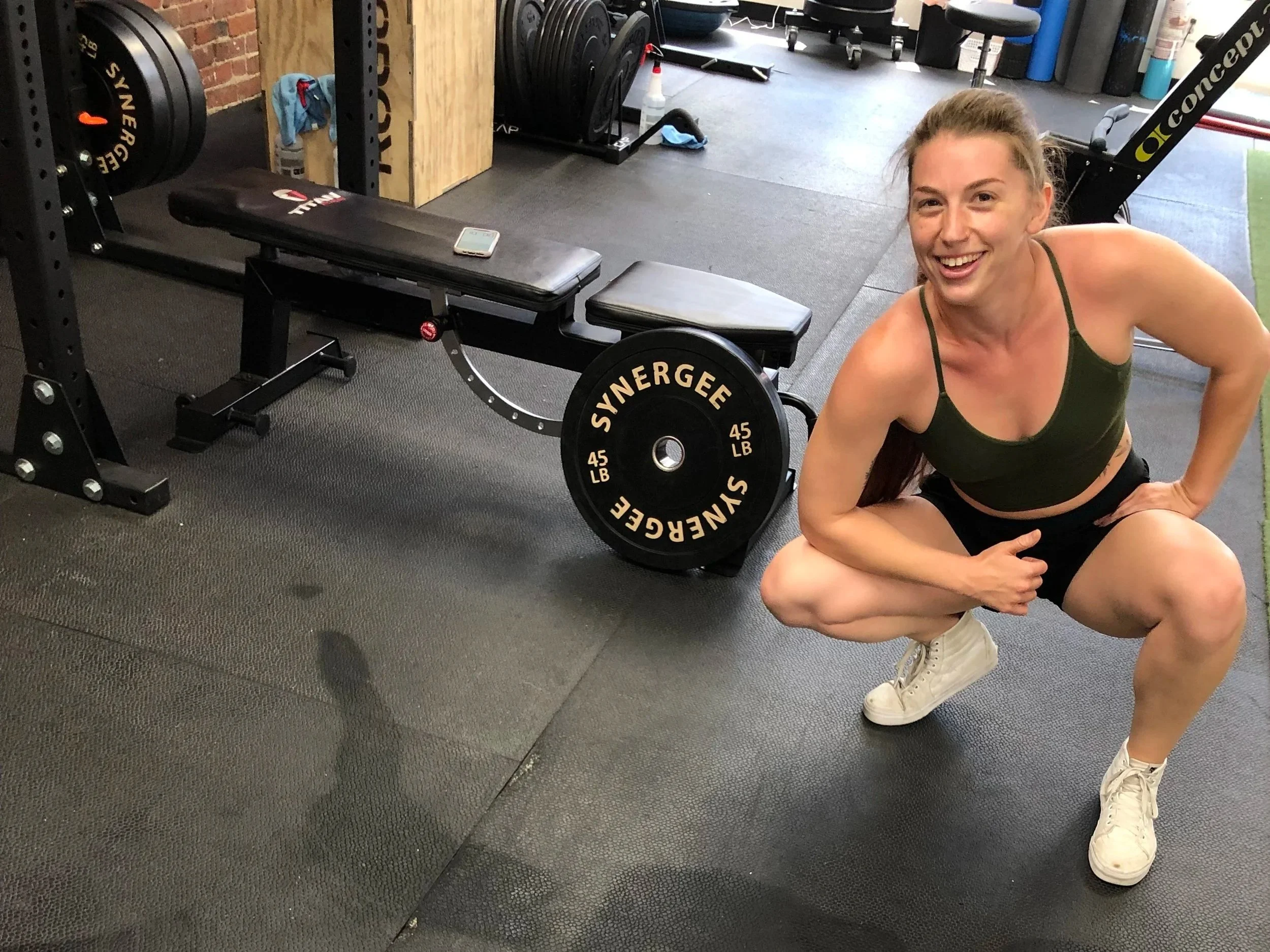
What the Research Says
The research around deep squatting and knees traveling past the toes has changed quite a bit from some of the old-school advice that still gets repeated.
A 2024 scoping review published in Frontiers in Sports and Active Living looked at the effect of deep squatting on knee structures and found that deep squats can be performed safely by healthy people. An earlier review in Sports Medicine also found that deeper squatting does not inherently increase injury risk when the movement is performed with appropriate technique and loading.
That lines up with what we see in the gym. The issue usually isn’t that someone’s knee passed their toes. The bigger issue is how much load they’re using and whether they actually have control in that position.
There Is No Inherently Bad Movement or Exercise
Another one of our philosophies is:
There is no inherently bad movement or exercise. Only bad loading strategies.
By bad loading strategies, we mean adding weight way too quickly to a movement you haven’t gained control in.
So a deep squat isn’t automatically dangerous. A lunge with the knee traveling forward isn’t automatically dangerous. What can get someone into trouble is rushing the process and putting more load on a movement than they’re prepared to handle.
We want people to gain control first, then progressively add load. That’s how you build strength without turning normal movement into something you have to be afraid of.
What We See With Clients All the Time
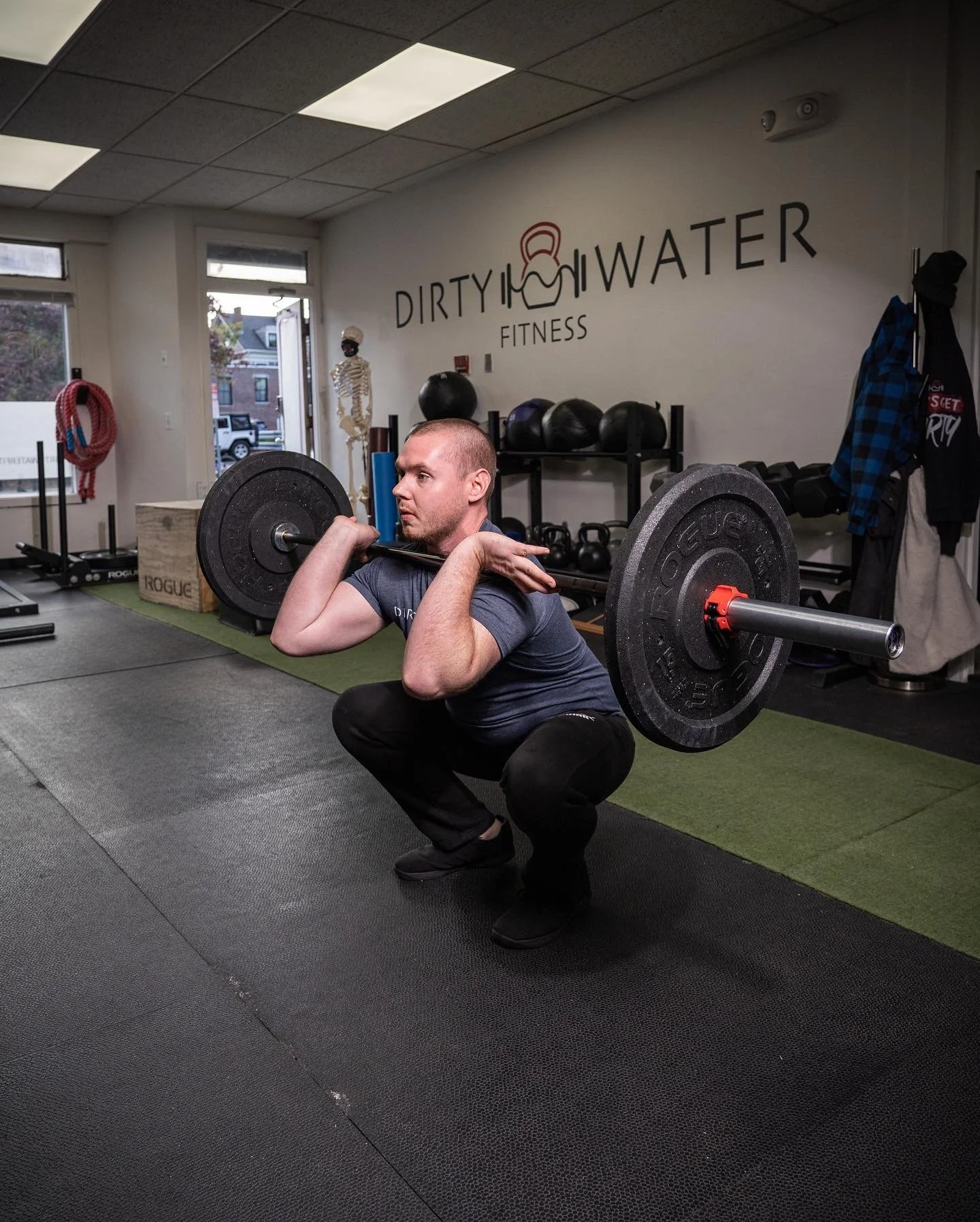
We regularly work with people who were told years ago that letting their knees travel forward was bad for them. The problem is that people often keep following the advice long after whatever issue they had is gone. They start trying to squat around an imaginary line at their toes, which makes the movement weird.
When we correct it and have them move their knees how they are meant to move, their squats instantly feel better and more natural. That’s one of the most common examples we see of someone being afraid of a position that their body is actually perfectly capable of handling.
What If Someone Does Have Knee Pain?
If someone does have pain, then we start them with isometrics. We’ll have them complete wall-sit or leg-extension holds right up to the threshold of pain, but not beyond. The goal is to let the person load the knee in a controlled way without pushing into a range that aggravates it.
After a few sessions, if the pain lessens, then we progressively load them deeper and eventually move on to dynamic exercises. That might mean gradually adding more knee bend or moving back toward squats and other lower-body exercises as they tolerate more.
In most cases, we will refer out to a rehab pro as well. If someone is dealing with actual pain or an injury, we want them getting the right care while we handle the strength side appropriately.
Knee Pain Just Changes the Starting Point
Someone with knee pain may need a different starting point, but that doesn’t mean the long-term goal is to avoid using the knee. We still want to expose the joint to controlled forces through training because this is how it adapts and becomes more resilient. The difference is that the loading has to match what the person can tolerate right now.
That’s why we might start with isometrics instead of immediately going into full-range dynamic work. Then, as symptoms improve, we can progressively load deeper positions and reintroduce more movement. The idea is to build capacity back over time instead of permanently avoiding the position.
The Bottom Line
So there you have it. If you don’t already have knee pain, go ahead an move your knees past your toes. In fact, please move your knees past your toes. Your knee joints won’t thank you for withholding their full range of motion for no good reason. And remember: there’s no inherently bad movement or exercise. Only bad loading strategies, like adding weight way too quickly to a movement you haven’t gained control in.
Lift your weights and live forever!
Ready to Train at Dirty Water Fitness?
If you’re in Cambridge, MA, and you’re looking for coaching that’s evidence-based, check out our Small Group Personal Training and 1-on-1 Personal Training options.
References
Rojas-Jaramillo A, Cuervo-Arango DA, Quintero JD, et al. Impact of the deep squat on articular knee joint structures, friend or enemy? A scoping review. Frontiers in Sports and Active Living. 2024;6:1477796.
Hartmann H, Wirth K, Klusemann M. Analysis of the load on the knee joint and vertebral column with changes in squatting depth and weight load. Sports Medicine. 2013;43(10):993-1008.